Thursday, November 28, 2019

In Monday’s class, Doctora put on a film called The Motorcycle Diaries.  This non-fiction movie is about young Che Guevara traveling around South America with his pal, Alberto.  Both men, educated in medicine, travel and are exposed to the harsh treatment of people living in poverty yet working long hours to provide for themselves. It was a heartfelt movie and I had no idea this was a true story about one of the most notorious figures of revolution- Che Guevara.


Class on Wednesday began with a quiz on The Motorcycle Diaries. The questions asked about certain scenes and themes.  I talked about the scene where Che told an older man he had a tumor. Che was honest because his compassion outshined the greed Alberto had. Alberto lied to the man so that him and Fuser could be on good terms with the man and stay the night at his house. Che appears to be a lovable character.  The themes in the film included class, compassion, oppression, politics, etc. Throughout their travels, Alberto and Che saw people living in poverty because they had lost their lands and lives to people with money and authority. This touched Che, and he is shown to have compassion for these people. In one scene, a mine company is abusing its workers and he calls out that the people are thirsty, yet the company man aggressively told him to get lost.


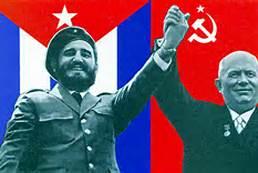
Che started supporting communism for better treatment towards people like the miners.  In class, we went into more detail about his life. Che’s mindset became violent as he sided more with communism. He oversaw over 2000 executions and was called the “butcher of la cabana”. He began to wipe out those who disagreed with his ideals. He was captured in Bolivia and executed in 1967 by the U.S. CIA.  


The rest of the class time included looking into the legacy Guevara left behind.  We contemplated the question, “Is Che a hero or a villain?” I personally believe he is a villain because no leader should kill their people because they disagree. Diversity is special and making everything the same is impossible.  However, he is a hero of youth.


Hear me out, young Guevara was a handsome honey...


Sunday, November 10, 2019

Evaluating Information & Academic Research


   As I walked into FYE class on Monday, my fellow peer, Emma Williams, was reading aloud an anonymous report from a student living in the Honors LLC who had an incorrect class registration date.  Honors students at Georgia Southern University have first priority when registering for classes. Their date is set earlier than the normal student body. However, this particular student had a later date than the rest of the honors students due to a miscommunication with their advisor.  This sparked conversation amongst my peers, as the stress of class registration filled the FYE classroom. Personally, I had no issues with registration and I got all the classes I needed. The only downside was waking up at 5:40 in the morning! 
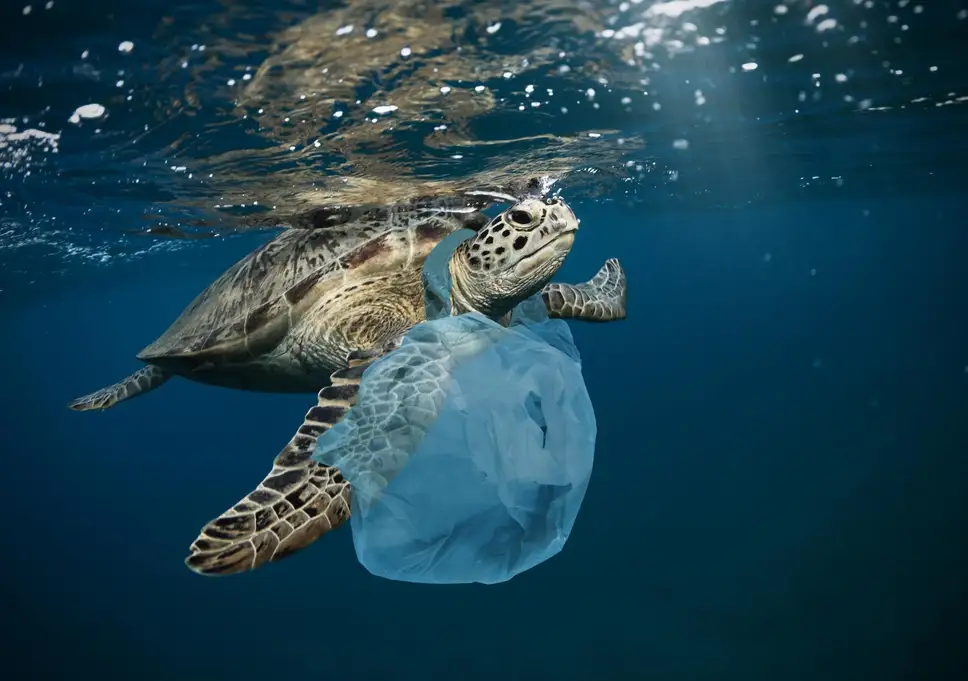
   This week's topic was evaluating information and research methods such as how to write a research paper using evidence that accurately supports a topic.  For homework due in Wednesday's class, we were assigned to research articles that answered a powerful question we deciphered. My question I made was, “What are the consequences of marine life ingesting plastic into their gastrointestinal tract?”  This question is powerful because it is broad enough to provoke elaborate conversation. Obviously, death is a large consequence, however, I found out through my articles that there can be body deformations and organ dysfunction as well. The two articles I chose were both related to marine biology.  My scholarly article was from a University's marine institute which had research and data on my topic. The sources were reliable because they were from credible professors. My second article was simply a website that stated marine facts. I cannot quite tell how reliable the authors of it were. 
Google Images


  In Wednesdays class, our peer assistant, Taylor, led the class.  We began by passing out a worksheet called the CRAAP test. Yep, you heard it right.   It stands for Currency, Relevance, Authority, Accuracy, and Purpose. Currency is how up-to-date a source is.  Relevancy is how important the source is to be used as evidence. Authority and accuracy determine how credible sources are.  Finally, purpose is simply the overall meaning of the article’s source like how it supports a topic. The CRAAP test is used when reviewing sources to determine their legitimacy.  We then used this test to dissect our articles part by part. According to the CRAAP test, my first scholarly article was more legitimate than my second article which just came from a website that anyone could have uploaded.
   It's very important to learn how to write research papers and how to incorporate accurate sources to support your topic.  I know other FYE classes have to write research papers, and I'm beyond thankful that our particular class does not have to.  I am already busy enough with biological research papers, but I cannot disregard how helpful this week has been with learning how to use and find sources.

Sunday, November 3, 2019

Preparing for Registration & Meaningful Inquiry

During Monday’s class, Erin Martin, a director in the Honors college, came in and discussed course registration for Spring 2020. She reviewed on information that our major advisors told us during our meetings including how to navigate the registration site.

When actually registering at 6am Nov 4, the following steps should be taken:
   Click Register (WINGS) on mygeorgiasouthern
   From there, click Student, registration, add/drop classes
   Enter your RAN given to you at your advisor meeting
   Type in CRNs (5 digit number by the course)
   And click submit changes!
Image result for class registration
Image credit- https://jmudailyduke.com/2015/01/21/class-registration/

The process seemed quite stressful until Erin showed us the process a little better.
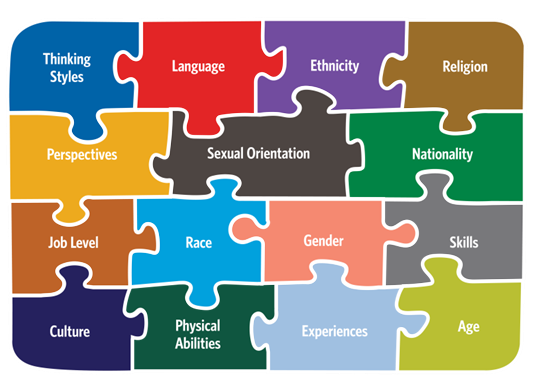
On Wednesday, class began with a quiz on "The Art of Powerful Questions" which was an article that discussed how questions should be re-worded in order to provoke conversation and lead to more questions being asked. On a handout given to myself and my peers, there was a question, "What kind of POWERFUL question could a student in FYE ask about this semester?" I wrote that a good powerful question should ask "why" and I answered the handout question with the response, "A good powerful question I could ask is '"Why is it important to learn about diversity as a college freshman?"' Doctora read my question aloud to the class and stated it was very thought provoking.
Image result for diversity
Image credit- https://www.helpscout.com/blog/diversity-inclusion-2019/

The next part of class involved reading anonymous powerful questions made by my peers. My peer's scenario was that he/she had to change their major because of their advisor messing up and making the student behind in their courses and he/she asked, "What possibilities are available to improve the personal connection between advisors and students?" What makes this question powerful is that it provokes discussion. Also, one can decipher more questions with this one question. While I do not have the answer, I believe there are ways to ask others if your specific advisor is not of much aid. There are a variety of resources at Georgia Southern!


Sunday, October 27, 2019

Degree Engagement


This week's topic focused around degrees and majors at Georgia Southern University (GSU).  Students around the nation who look to enter their collegiate years know that declaring a major early on is crucial, so they can get ahead on classes.  However, it is common for students to change their majors as time goes on. At Georgia Southern, there are many resources for students to navigate such as courses to take and what careers can come out of a certain degree.
Related image
Image Credit- https://www.fool.com/careers/2018/10/12/good-news-you-might-not-need-that-college-degree-a.aspx
   In class Monday, we looked at program maps for certain degrees.  Similarly, the University catalog has answers and resources for many questions students have about their degree pathway.  The catalog finds requirements for particular degrees and it has a walk through for each component of college. My degree is in Biology, and I hope to go on to become a Marine Biologist when I am older.  GSU does not have a particular marine focus in their general Biology degree, so I checked out the Major and Career Exploration Center on Georgia Southern's website to explore options to get a marine career after college.  It guided me through internship options and courses to take that are considered pre-requisites for the broad Marine Biology career.
Link to the Major and Career Exploration Center- students.georgiasouthern.edu/mace/
   Next, in class, we circled characteristics that are valuable to us.  The traits are what we represent and what we think will benefit our future selves.  Some traits I circled were honesty, love, family, exploration, compassion, and cooperation.  These traits I believe describe me and will be beneficial to keep up if I hope to gain respectable employment someday.
Image result for honesty
Image Credit- © 2019 Winkfield ST MARY'S C of E SCHOOL. School website 
 On Wednesday, we discussed the values we circled on the worksheet from Monday.  My peers talked about plans and ideas for how they will carry themselves in their college years.  We discussed bumps in the road and how our values must come into play to lead us to success. As college students, we have more of a responsibility to carry ourselves maturely and find ways to deal with "adult" incidents.  Halfway through class, we gathered into groups of three or four and discussed the values that are important to us (the ones we dealt with on the worksheet). My group had very different characteristics. Bry-Anna put "love" and "independence."  She said that she came from a rough family background where she grew up having to depend on herself over her parents. She also stated how challenges in her life have made her an independent individual in the best ways. On the other hand, JD put "family" and "honesty" as values that he deems important.  His family is his rock and have taught him lessons that will stick with him his entire life. JD related more to me with values like honesty and compassion, but it was interestingly fun to hear different perspectives.
Image result for diversity
Image Credit- https://www.thecloroxcompany.com/blog/our-refreshed-global-inclusion-diversity-strategy/
   The best part of class Wednesday was when Doctora made the point that humans don't like change, yet it is inevitable.  When a bump in the road occurs, one has to keep going and choose important values to focus on. “Listen to people who you trust... and who know you," stated Doctora.

Sunday, October 20, 2019

Week 9: Diversity & Inclusion IV

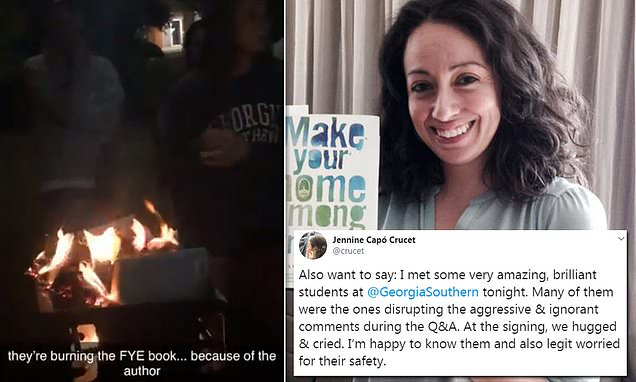
My anticipation for class on Monday was high.  What were my peers going to think of Crucet’s speech and the students’ burning copies of her book?  Would my teacher have a riveting opinion? Would there be any brawls among peers? The events on October 9th, as discussed in last week’s blog, were the topic of discussion in class Monday.  To begin with, the entire class filled out a questionnaire that asks students to anonymously report how they felt about Jennine Crucet’s speech. I am not shy to say that her talk made me uncomfortable.  Off the bat, her public speaking was not ideal which drew my attention further from her. What drew me back in was her condescending tone and unflattering jokes which included one about a school shooting.  Her authoritative presence made me feel even more threatened because of her status as a professor and successful author.


The class discussion began with the notion that her tone was condescending.  Doctora made the point that her being Latina was one of the reasons she came off as aggresive.  Crucet even has addressed in the past that her temper often gets misunderstood, and during her speech at GSU she had to grasp the podium to keep from using hand signals that could be mistaken as aggressive.  She did not succeed overall, as her tone was blown out of proportion and controversial among GSU students. 
The infamous gun joke was also a hot topic.  During her speech, Crucet heard whispering in the audience and jokingly projected her thoughts that there may be a shooter in the crowd ready to open fire.  This was beyond uncomfortable and unnecessary.
In Wednesday’s FYE class, the discussion of last week's events continued but included a lesson on white privilege and defining it.  The most memorable and mind blowing part of class was when Doctora defined white privilege as going out and not having to ponder your skin tone. She used an example of gender to parallel the comparison.  She asked the males if they ever had to worry about walking to their car at night. None of them were phased. She then asked the females, and most girls looked around and nodded. White privilege is not having to think about the fact that you're white. It is an unfortunate reality that there is even a privilege level of race, as each individual should be equal no matter their skin tone and only judged on the basis of their actions.

Sunday, October 13, 2019

Make Your Home Among Strangers


Class on Monday began with a brief quiz over the assigned book, Make Your Home Among Strangers.  Following the quiz, an article was passed out called, “Against All Odds: GSU professor recounts journey to America”.  The article tells of a man named Gaspar Leiva who left Cuba in 1993 with his two sons in order to live a more prosperous life in America.  Leiva spent a year building a boat that could transport them to the U.S. They successfully made it out of Cuba, and they began a life in America. As the title states, Leiva became a professor at Georgia Southern University.


We then watched an ABC News episode about a child named Elian Gonzalez.  He was brought from Cuba with his mother, who died on the journey. This reminds me of Ariel Hernandez from Make Your Home Among Strangers who was a character based off Elian.  After watching the documentary Elian, I learned more about the life and controversy of Elian Gonzalez.  He was on a boat on the way to American, and the boat was wrecked. He lived in Miami with his mom’s side cousins, but his father in Cuba demanded for him to be returned because his mom, who stole her son to go to the U.S., died.  Fidel Castro got involved which caused media to be involved. The Cubans in Miami at the time were against Cuba because of the communist policies. The families in the U.S. had a taste of the freedom America offered, and they wished for their families back in Cuba to have the luxury of freedom.

See the source imageRelated image


This whole week was centered around immigration and race.  I typed the above paragraphs before the infamous incidents that occurred on Wednesday, October 9.  My original plan for this blog was to discuss Make Your Home Among Strangers and Cuban immigration; however, the night of October 9th changed my plan.  On this evening, the author of Make Your Home Among Strangers, Jennine Capo Crucet spoke to FYE classes in the GSU Performing Arts Center.  I, myself, was not in the main auditorium where she spoke but instead was in the screening room.  I am so thankful I was not in the same room as she was. Instead of talking about her book, which is what I, and the majority of students, was expecting, she spoke on race and growing up a Latina woman in the United States.  Many students were outraged as she made comments on white privilege, too. The student body of GSU is predominately white, and the comments made were personally attacking white people. Since her visit, controversy has surrounded the event and made national news.  Following the event, students at one of the freshman dorms, Eagle Village, burned copies of Make Your Home Among Strangers.


Link to article on Georgia Southern students burning copies of MYHAS: https://www.usatoday.com/story/news/education/2019/10/10/race-latinx-author-georgia-southern-university-burning-book/3933292002/

Image result for jennine capó crucet


The events of this past week have saddened me.  As an individual who appreciates a variety of cultures, I feel both Crucet and the GSU students who attacked her on Twitter and committed the book burning are at fault.  Crucet should have stuck to expectations and talked about her book process. I am glad she spoke on white privilege, as I believe it is a legit issue, but the way she conveyed her ideals were unnecessarily aggressive.  Similarly, students should not have abused their 1st Amendment rights. Book burning is a serious offense that was not appropriate for the situation. With her authority, I wish she had tried to bring together the ethnicities that surround college campuses. It is embarrassing to be a student who was not involved in any of the events, yet I am being stereotyped for being a white individual that attends Georgia Southern. The media has caught the news from GSU and it makes me as a student look horrible.

Sunday, October 6, 2019

Diversity & Inclusion III - Instructions Not Included

   This week, the class was assigned yet another film to watch called Instructions Not Included.  Before watching the film and only seeing the cover, I assumed it was about a man having an unexpected child he must raise.  This was an accurate assumption, but the details were far more extensive.
Image result for instructions not included
Credit: https://usa.newonnetflix.info/info/70284281 

  The film begins with a scene between the main character, Valentin, and his father.  Valentin is a young boy and his father forces him to partake in activities like jumping off a cliff, that intimidates young Valentin.  The film then cuts to an older Valentin engaging in scenes with different women.  The lesson from his childhood comes back to haunt him.  The lesson being able to overcome fears and Valentin's major one is commitment, hence why he is with multiple women and not one.  This theme of commitment continues in the movie when one day a woman from Valentin's past comes to his door with his child.  He is confused and doubts that the child is his, but, by the time he can process it, the woman leaves the child and does not return.  The movie follows Valentin's journey of raising the child.  His initial reaction was fear of commitment as he tries his best to give the child back to his fled mother.  However, he ends up settling with the child and gets a job as a stuntman to provide for him and his new responsibility he names Maggie.
   One of the most touching aspects of the movie was the fact that Valentin wrote letters himself and gave them to Maggie telling her that they were from her mom.  He also copies and pastes images of a woman onto many different images as to portray the made-up woman which is Maggie's mom.  In order to compensate with the truth of Maggie's mother, Valentin makes up stories.  Maggie is bullied in school for the irrational stories she tells the class, yet she does not know any better because her dad makes them up to make her happy, since he knows about her unfortunate future.
Image result for instructions not included
Credit: https://www.hollywoodreporter.com/news/miami-film-fest-how-instructions-688826

   In a particular scene near the halfway point in the movie, Valentin and Maggie are in a doctors office.  Valentin receives a shot and Maggie is given vitamins by the doctor.  When Maggie leaves the room, it is revealed that a treatment given to Maggie did not work and she has a limited amount of time to live.
   Later on in the film, Maggie's biological mother, Julie, comes back into Valentin's life to meet her daughter.  Maggie is welcoming and excited to hear about her mom's journeys, which Julie is unaware about.  They hit it off and Julie soon goes to trial to be more involved in Maggie's life.  She looks to take Julie to New York and away from Valentin who, as a stuntman, Julie sees as dangerous and not fit to raise Maggie.  Little does her mother know that Maggie has only a short time to live, and Valentin is being wise in raising her with comfort and happiness.
  Near the end, there is a court scene advocating the pros and cons of Valentin's qualifications to raising Maggie.  One person claims he gives Maggie everything and Maggie is always so happy, while another claims he has allows Maggie to skip school and act out of place.  On the stand himself, Valentin pleads that he quit his stuntman job to get a more fitting job.  He then goes into details about the joy he and Maggie share when they're together like watching the sunset over the sea.  His final word is "I don't think you should give a little girl her father...and then take him away from her, just because the mom thought it over and wants her back."
  At the very end of the movie, Valentin, Julie, and Maggie are watching the sunset in Mexico and Maggie's arms go limp and she passes away.
  The lessons from this movie are that life will throw fears in one's life, but often the things we fear give us opportunities to learn and grow.  Valentin confesses that Maggie did not halt his life as he initially assumed, but rather she taught him how to live and love life.
Related image
Credit: https://www.npr.org/2019/02/14/694635029/love-is-_____-more-than-2-000-entries-filled-in-the-blank

   This movie exceeded my expectations.  I was emotional at the end when Maggie died, and I watched this alone which likely amplified my sadness.  The amount of effort Valentin put towards Maggie to make sure she lived a happy life was touching.  From writing letters from a made-up mom to spending each night with her telling her stories, it shows that he cared extensively for her even though the dad life was thrown on him.  In a review by Common Sense Media, it is stated that this film is, "an unorthodox, fanciful portrayal of the loving bond between father and daughter with moments of inspired animation and slapstick action that are combined with real human consequence."